Lens based media - The Anamorphic World
(In Greek, the word “ana” means “again” and “morphe” means “shape” or “form”)
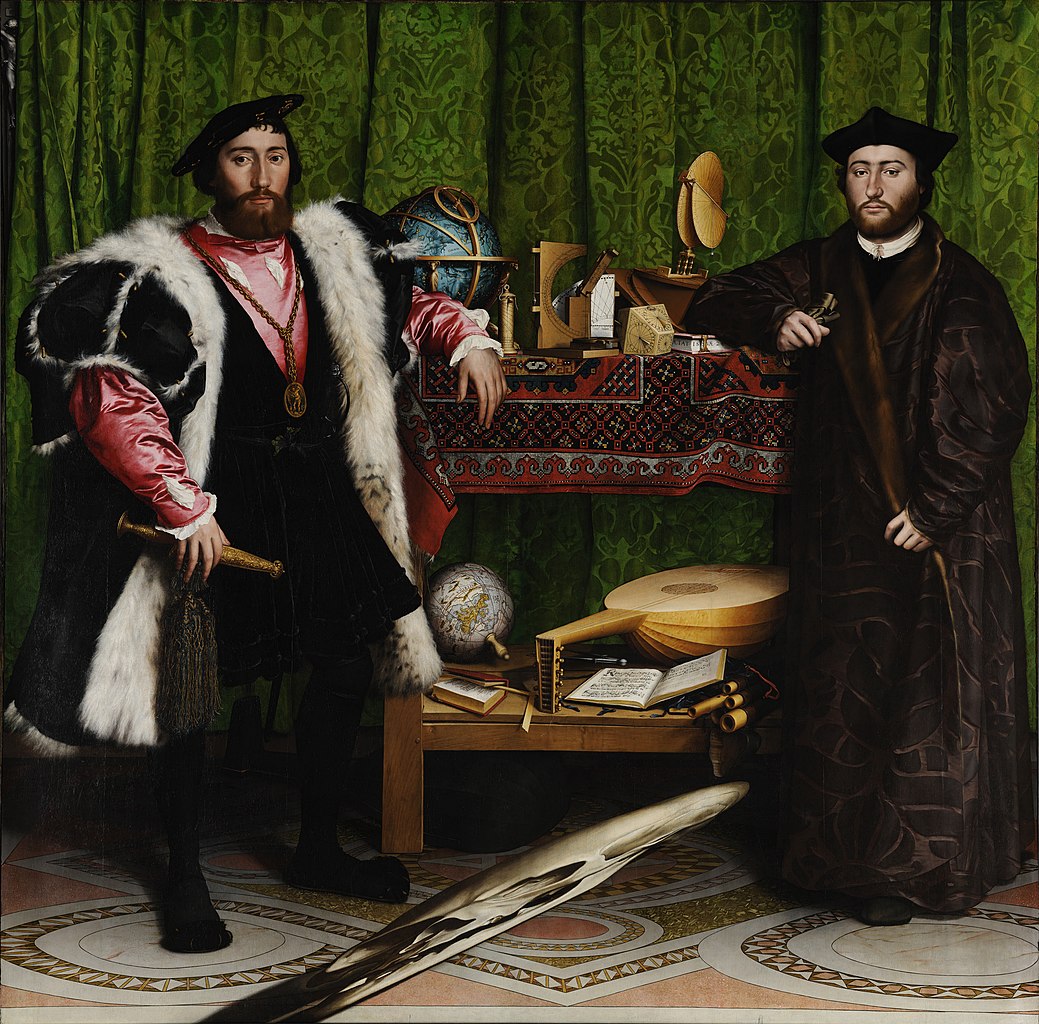
When beginning this project we had to question the world around us and see things that we would usually ignore. Literally or conceptually we had to look through film or photography at things not being as they seem. This could be something small or large but has to be something which makes you question it or take a second look. We looked at work such as Hans Holbein's “The Ambassadors” 1533 which presents a simplistic, traditional painting however with a very obscure, disproportionate skull. It was painted in such a way that only when you look at a certain angle can it be seen correctly. This cleverly plays with the norms of perception which is something that was uncommon in paintings at this time. The artist has painted it in a way that hides it at first glace as at first, the focal point is on the two men in the painting. It is only when you look closer that you see the skull and this is a perfect example of giving something a second glace and looking deeper into the work.
The National Gallery
 At the national gallery I was able to observe older paintings that usually appear to be quite generic however when looking closer you are able to see a number of things that are not as they seem. This may be through the way the artist has painted (colours, textures) or through the subject of their piece. When in the gallery i found this piece which was a small sculpture which appeared to be 3D and have a lot of depth, however when looking from another angle you are able to see that it is very 2D with only a very small amount of depth.
I found this interesting as it intended to be visually confusing for the viewer. I knew that I wanted my piece to make the viewer believe that they are in a certain world or reality when they are not and I thought that this piece perfectly symbolised this.

No comments:
Post a Comment